
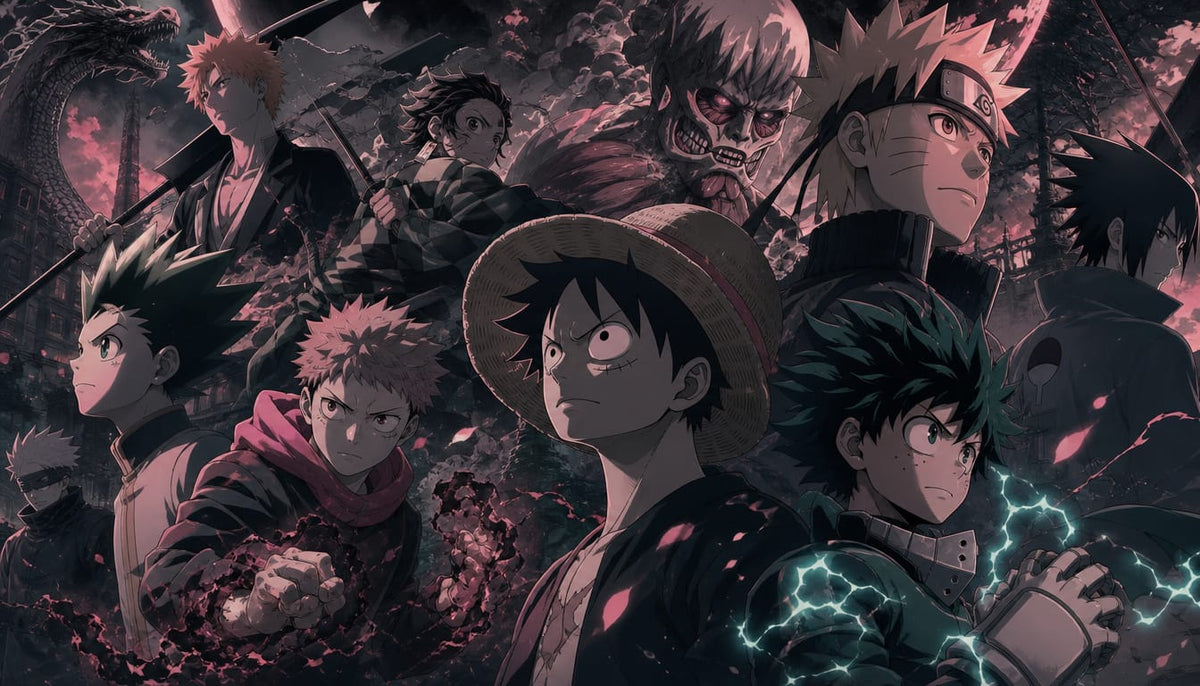
Shonen anime isn't slowing down — it's accelerating. In 2025, series like Demon Slayer, Jujutsu Kaisen, Chainsaw Man, and One Piece are breaking streaming records, selling out merchandise globally, and dominating social media conversations in real time. But virality alone doesn't explain longevity. So what is it, really, that makes shonen anime one of the most powerful storytelling formats on the planet?
Let's go deeper than the surface.
The Underdog Formula — Why It Works Every Time
At the structural core of nearly every shonen series is a deceptively simple premise: a protagonist who starts with nothing and earns everything. This isn't lazy writing — it's one of the most psychologically resonant narrative frameworks in human storytelling, rooted in what researchers call the effort-reward loop.
When we watch Tanjiro Kamado train until his hands bleed, or Yuji Itadori absorb Sukuna's curse and keep fighting, we're not just watching fiction — we're experiencing a vicarious rehearsal of resilience. The brain responds to these arcs with genuine emotional investment because the stakes feel earned, not handed.
Dragon Ball pioneered this formula at scale. Goku's journey from a naive Saiyan child to a warrior capable of reshaping reality across multiple timelines is a masterclass in escalating stakes tied to personal growth. The power-ups aren't arbitrary — they're narrative rewards for demonstrated character development. That's why Ultra Instinct still gives fans chills decades after the original series aired.
👉 Shop the legend: Dragon Ball Super Goku Ultra Instinct Figure | Banpresto Vegeta Battle Armor Figure
Demon Slayer — The New Gold Standard of Emotional Stakes
Kimetsu no Yaiba redefined what mainstream audiences expect from shonen animation. Its secret weapon isn't just Ufotable's jaw-dropping visual production — it's the emotional architecture underneath every fight sequence.
Tanjiro doesn't fight because he wants power. He fights because his sister is trapped between humanity and monstrosity, and he refuses to abandon her. That distinction — motivation rooted in love rather than ambition — gives Demon Slayer an emotional weight that cuts across demographics. It's why the Mugen Train arc broke box office records globally and made grown adults cry over a fictional flame pillar.
The series also does something rare in shonen: it makes its villains sympathetic without excusing them. Akaza's backstory reframes his nihilism as grief weaponized. That moral complexity is what separates prestige shonen from simple action fare.
👉 Collect the arc: Demon Slayer Sitting Rengoku Furyu Figure | Tanjiro Kamado Pajama Rabbit Figure | Zenitsu Agatsuma Funko Pop
Jujutsu Kaisen — When Shonen Gets Dark
Gege Akutami's Jujutsu Kaisen arrived as a deliberate subversion of shonen conventions — and the fandom responded with explosive enthusiasm. Where traditional shonen promises that hard work and friendship will prevail, JJK operates on a different contract: effort matters, but so does tragedy, and not everyone makes it out.
Yuji Itadori is a fascinating protagonist precisely because he carries Sukuna — the most dangerous cursed spirit in existence — inside his own body. His internal conflict isn't just physical; it's existential. Every victory comes with the question: at what cost? That tension keeps viewers locked in across every arc.
Gojo Satoru became a cultural phenomenon not just because of his power, but because of his philosophy. His belief that the next generation can change the system — and his willingness to die for that belief — resonates with younger audiences navigating their own institutional frustrations.
👉 Own the curse: Jujutsu Kaisen Gojo Satoru Furyu Figure | Sukuna Nendoroid Figure | Choso Luminasta Figure
Chainsaw Man — The Genre, Deconstructed
If Demon Slayer is shonen at its most emotionally refined, Chainsaw Man is shonen with the mask ripped off. Tatsuki Fujimoto's work is a deliberate, often brutal interrogation of the genre's tropes — and it's resonating with a generation of fans who grew up on those very tropes.
Denji doesn't want to save the world. He wants a normal life: good food, a warm bed, someone to hold. That radical ordinariness in a genre built on grand ambitions is disarming and darkly funny. But underneath the absurdism is a genuinely moving story about a boy who was never given the chance to want anything bigger — and what happens when the world keeps taking even the small things away.
Pochita, his chainsaw devil companion, has become one of the most beloved characters in recent anime history — not because of power, but because of unconditional loyalty. In a genre full of rivals and mentors, a dog-shaped devil who just wants his human to be happy hits differently.
👉 Bring Pochita home: Chainsaw Man Pochita Stuffed Animal | Chainsaw Man Gachapon Figure Set | Chainsaw Man Keychain Figures
One Piece — The Long Game, and Why It Wins
No conversation about shonen dominance is complete without One Piece. Eiichiro Oda's 25+ year epic is the highest-selling manga in history — and it's not slowing down. The Wano arc reignited global interest, and the live-action Netflix adaptation introduced the Straw Hats to an entirely new generation.
What makes One Piece structurally unique is its world-building density. Every island, every villain, every Devil Fruit has lore that connects back to a larger tapestry. Fans don't just watch One Piece — they study it. The theorycrafting community around the series is one of the most active in all of fandom, because Oda consistently rewards long-term attention with payoffs that span decades.
Luffy's Gear 5 awakening — and its connection to the Sun God Nika — was a narrative event years in the making. The internet broke. That's the power of patient, intentional storytelling at scale.
👉 Set sail: One Piece Luffy & Chopper Keychain Figure | Bandai Yamato SHFiguarts Figure | Roronoa Zoro DXF Figure
The Community Effect — Why Fandom Is Part of the Product
Shonen anime doesn't just create viewers — it creates participants. The community surrounding these series is as much a part of the experience as the episodes themselves. Theory threads, reaction videos, cosplay, fan art, merchandise hauls — these aren't peripheral activities. They're the ecosystem that keeps a series culturally alive between seasons.
This is why shonen merchandise carries weight beyond decoration. A figure on your shelf isn't just a collectible — it's a signal, a conversation starter, a physical anchor to a story that meant something to you. The best pieces capture a specific moment: Rengoku's final stand, Gojo's blindfolded confidence, Zoro's three-sword stance. They're memory objects.
The global shonen community has also become a genuine gateway to Japanese culture — language, food, history, mythology. Fans who started with Dragon Ball in the 90s have spent decades deepening their relationship with Japan as a result. That cultural bridge is one of anime's most underappreciated contributions to global interconnection.
Why Shonen Isn't Going Anywhere
The genre continues to evolve because its best creators are willing to interrogate it. Fujimoto deconstructs it. Akutami darkens it. Oda expands it. Gotoge emotionalizes it. Each new generation of mangaka inherits the formula and bends it toward something new — which is exactly why shonen remains the most commercially dominant and culturally resonant genre in anime.
The stories change. The emotional core doesn't: growth is possible, bonds matter, and the fight is worth having.
If you're building your collection or looking for the perfect piece to represent a series that shaped you, explore the full range at FIHEROE. — premium anime collectibles curated for fans who take their passion seriously.


Leave a comment
Join the conversation and share your thoughts